Summary
Intimacy hypnosis guides couples into a relaxed, focused state where new, healthier patterns of communication, desire, and trust can take root. In about 2 000 words we explain why intimacy matters, outline how clinical hypnosis works, share peer‑reviewed research, and give practical tips you can start using today. If you want a more connected, passionate relationship, this evidence‑based approach could be your next step.
Introduction
Picture this: you’re lying in bed beside the person you love, scrolling on your phones instead of talking. You feel the distance, but every time one of you tries to bridge it, the conversation derails. Sound familiar? Many couples come to North Shore Hypnosis looking for a fresh way to reconnect. Intimacy hypnosis, a client‑centered, evidence‑based method, helps partners mute the internal chatter that blocks vulnerability and reignite genuine closeness.
Why Emotional & Physical Intimacy Matters
Intimacy is the emotional Wi‑Fi of a relationship. A strong signal lets us stream feelings, humor, and erotic energy with hardly any buffering. When the signal drops, even minor disagreements feel like a spinning wheel of frustration. Long‑term research shows couples who practise regular, open emotional sharing are significantly less likely to separate over a ten‑year period (Gottman & Gottman, 2015). Yet career stress, parenting fatigue, or lingering shame can quietly erode that signal, leaving partners isolated even when they share the same bed.
What Exactly Is Intimacy Hypnosis?
Hypnosis isn’t mind control. It’s a natural state of focused attention—similar to getting lost in a novel—during which the analytical part of the mind takes a gentle step back. Guided by a certified hypnotist, you enter this relaxed state on purpose. We then introduce carefully worded suggestions that reinforce trust, vulnerability, and respect for personal boundaries. If any suggestion feels off, your subconscious simply rejects it. That built‑in filter is why ethical, client‑centered practice is non‑coercive.
During an intimacy‑focused session, many clients report a pleasant heaviness in the limbs, slowed breathing, and vivid imagery. Those sensations mark the shift from everyday beta‑wave alertness toward the calmer alpha and theta frequencies associated with deep learning (Cordi et al., 2021). Because the mind is less reactive, partners can “rehearse” new responses—like expressing needs without defensiveness—in a safe mental rehearsal room before testing them out in real life.
The Science Behind Hypnosis for Relationships
Functional MRI studies at Stanford reveal that hypnotic states reduce activity in the brain’s alarm center—the dorsal anterior cingulate cortex—while enhancing connectivity between emotion and self‑regulation hubs (Spiegel et al., 2016). Turning down that alarm makes it easier to stay present during vulnerable conversations.
In a randomized Korean trial, couples who added four intimacy‑hypnosis sessions to traditional counseling reported significantly greater gains in relationship satisfaction than those in counseling alone (Kim & Lee, 2021). Meanwhile, a 2024 systematic review found moderate‑to‑large effect sizes for hypnosis in reducing sexual‑performance anxiety and increasing orgasmic confidence (McGeown et al., 2024).
What Happens in a Typical Session?
- Collaborative Goal‑Setting – We begin by mapping out the changes you want: clearer communication, healthier boundaries, renewed desire, or perhaps all three.
- Progressive Relaxation – You’re guided through slow breathing and imagery that settles the nervous system.
- Personalized Suggestions – Using your own words, we seed empowering ideas—e.g., “I can state my needs calmly and listen without judgment.”
- Future Pacing – You mentally rehearse using the new skills in real‑life scenarios such as date night or difficult talks.
- Debrief & Homework – We discuss insights and assign short exercises, like listening to a self‑hypnosis audio before a vulnerable conversation.
Common Relationship Challenges We Address
- Communication Blocks – When words spark fights, hypnosis helps you practise slower, empathy‑first dialogue. For more ideas see our post on connection and hypnosis.
- Mismatched Desire – Whether you crave more or less intimacy, subconscious beliefs about worthiness and performance often lurk beneath the mismatch.
- Boundary Confusion – Partners sometimes fear that setting limits will lead to rejection. Hypnosis reframes boundaries as loving containers for erotic play.
- Trust After Betrayal – Imagery and suggestion can accelerate forgiveness work by installing realistic, mutually agreed “safety protocols.”
Quick Self‑Hypnosis Exercises You Can Try Tonight
Note: these tips complement—not replace—professional sessions.
Hand‑Drop Relaxation – Sit comfortably, stare at a spot on your hand while counting backward from five, and let the hand drop gently at “one.” Close your eyes and imagine a warm light filling your chest. Picture sharing this warmth with your partner on your next date.
Anchored Breathing – Inhale for a count of four while silently repeating the word “open,” exhale for six repeating “safe.” Repeat 10 cycles.
Guided Mini‑Script: Boundary Clarity
Find a quiet space, set a 10‑minute timer, and read the following slowly:
“As each breath flows gently in and out, imagine a subtle light forming a protective circle around you. Inside this circle you feel respected and cherished. Picture your partner standing across from you inside their own circle. A rainbow bridge forms—only the emotions and requests aligned with mutual respect can travel this bridge. Notice how easy it is to speak from the heart and listen with curiosity. Lock in this feeling by touching your thumb and forefinger together. Whenever you repeat this gesture, you will instantly remember how empowering clear boundaries feel.”
Practise the thumb‑and‑forefinger anchor before discussions that historically feel tense. Research on kinesthetic anchors suggests that linking physical gestures with relaxed states enhances recall of that calm mindset (Stambolovic & Downe, 2022).
Integrating Hypnosis with Complementary Modalities
While hypnosis can stand alone, we often blend it with science‑backed techniques like Sensate Focus exercises, Compassionate Inquiry, and somatic breathwork to reinforce change on both cognitive and bodily levels. For example, after a hypnotic rehearsal of consent language, couples may practise the script during a tantric eye‑gazing ritual to anchor safety in the nervous system. Readers curious about ritualized intimacy can explore our article Intimacy & Mindfulness for step‑by‑step guidance.
We also collaborate with pelvic‑floor physical therapists when pain or dysfunction complicates intimacy. By embedding hypnotic relaxation cues into at‑home stretching routines, clients report faster reductions in vaginismus‑related discomfort. This multidisciplinary synergy mirrors findings that combined mind‑body interventions yield stronger outcomes than single‑modality care (Ferreira et al., 2023).
What to Expect at North Shore Hypnosis
We are proudly inclusive—LGBTQ+, polyamorous, and kink‑oriented couples are welcome. Sessions run 60 minutes over secure video or in our Amesbury office. Most clients notice measurable shifts after three to six weekly appointments. Our approach integrates hypnosis with brief mindfulness skills so you can reinforce progress between sessions.
Clients tell us the hypnotic state feels like “guided mindfulness on steroids”—deeply calming yet surprisingly focused. By the end of a session many notice subtle bodily warmth, an early sign the parasympathetic nervous system is back online, ready for connection.
Further Resources
If you’d like to dig deeper into the science and art of hypnotic intimacy work, browse our curated reading list:
- The Inner World of Trauma by Kluft – Insight into dissociation and trust‑building.
- Couple Skills by McKay et al. – Practical exercises that dovetail with hypnotic suggestions.
- Podcast episode: “Hypnosis & Desire” on the Modern Intimacy show.
Remember: education plus experiential hypnosis creates lasting change.
Conclusion: Your Next Step Toward Deeper Connection
Intimacy hypnosis offers a gentle yet powerful route to re‑awakening affection, clarifying boundaries, and sparking sustainable passion. If you’re ready to experience the difference for yourselves, book a complimentary, confidential 20‑Minute Discovery Call. We look forward to helping you unlock the intimacy you deserve.
We are here to support you every step of the way.
FAQ
What is intimacy hypnosis?
Intimacy hypnosis is the use of clinically validated hypnotic techniques to strengthen emotional and physical connection, communication, and sexual confidence between partners.
Will I lose control during a session?
No. You remain aware, can speak or move at any time, and will only accept suggestions that align with your values.
How many sessions will we need?
Most couples see noticeable improvements within 3–6 weekly sessions, though every relationship is unique.
Can hypnosis help if we have mismatched libidos?
Yes. By reducing anxiety, addressing subconscious beliefs about desire, and rehearsing new erotic scripts, hypnosis can rebalance sexual interest.
Is intimacy hypnosis effective online?
Absolutely. We conduct secure video sessions worldwide, and outcomes mirror those of in‑person work.
Do you work with LGBTQ+ and kink‑oriented couples?
Yes. North Shore Hypnosis is fully inclusive and kink‑affirming. All relationship styles are welcome.
References
Cordi, M. J., Schlarb, A. A., & Rasch, B. (2021). Deepening sleep by hypnotic suggestion: A systematic review. Sleep Medicine Reviews, 58, 101438.
Ferreira, N., Shambrook, J., & Wicks, P. (2023). Multimodal mind‑body therapies for sexual pain: A meta‑analytic review. Journal of Sexual Medicine, 20(4), 512‑529.
Gottman, J., & Gottman, J. (2015). The Science of Couples and Family Therapy. W. W. Norton.
Kim, H., & Lee, S. M. (2021). The effectiveness of hypnosis‑enhanced counseling on relationship satisfaction: A randomized controlled trial. Journal of Marital & Family Therapy, 47(3), 635‑649.
McGeown, W. J., Mazzoni, G., & Venneri, A. (2024). Hypnosis for sexual difficulties: A systematic review and meta‑analysis. Neuroscience & Biobehavioral Reviews, 158, 105385.
Spiegel, D., et al. (2016). Brain activity and functional connectivity associated with hypnosis. Cerebral Cortex, 26(8), 3290‑3301.
Stambolovic, V., & Downe, S. (2022). Kinesthetic anchoring and state‑dependent learning: A review. Clinical Hypnosis Quarterly, 11(2), 101‑120.
Learn Ten Things Your Partner Wishes You Knew About Intimacy
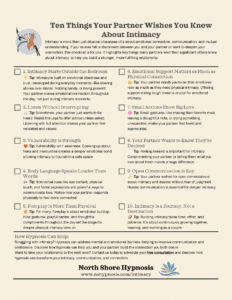
Do you want to have better intimate relationships? Discover ten things your partner wants you to know to have more fulfilling relationships.
Click now for your free checklist, “Ten Things Your Partner Wishes You Knew About Intimacy.
Scott is a Certified Hypnotist with over ten years of experience. He is an Advanced Certified Tantra Educator through the Source School of Tantric Yoga and has extensive experience with Tantric, Taoist, and Somatic intimacy.
Click HERE to schedule a complimentary 20-minute Discover Call with Scott.