Summary:
Discover how sexual creativity hypnosis can help you and your partner break free from routine, tap into playful spontaneity, and deepen intimacy. We explore the neuroscience of imagination, evidence-based hypnotic techniques, and practical exercises you can start today.
Introduction
You know that electric thrill when desire strikes at an unexpected moment—the playful wink across the room or the spontaneous kiss that makes the world disappear? With sexual creativity hypnosis, we can reignite it. When couples report feeling ‘stuck in a rut,’ the issue seldom lies in lack of love—rather, it’s often a shortage of mental space to play. Everyday responsibilities crowd the imagination, and inhibiting beliefs like “I’m not creative” or “We’ve tried everything” become self‑fulfilling prophecies. By guiding the mind into a relaxed, resource‑rich trance, we help partners unearth dormant fantasies, transform anxiety into curiosity, and script fresh, exciting scenarios—all while anchored in mutual respect and consent.
Why Sexual Creativity Matters in Relationships
Routine is comforting, but it can also become a passion killer. Sexual creativity—the ability to imagine, play, and surprise—keeps bonds vibrant. Research shows that novelty activates the brain’s reward circuitry, releasing dopamine and oxytocin, chemicals linked to desire and attachment (Krems et al., 2021). When we consciously weave creative sexuality into our lives, we increase relationship satisfaction and overall well‑being.
Unfortunately, many of us learned that ‘good sex’ should be spontaneous and perfect without practice. This myth discourages skill‑building. Hypnosis reframes intimacy as an evolving art, empowering partners to practice creatively in imagination first, so the bedroom becomes a studio rather than a stage.
Common Blocks to Sexual Creativity (and How Hypnosis Helps)
Performance Anxiety. Worrying about looking awkward disrupts erotic flow. Hypnotic desensitization pairs relaxed breathing with scripted ‘blooper’ moments, teaching the brain that imperfection can be playful (Barrett, 2010).
Body Image Concerns. A trance‑based ‘body kindness’ protocol combines compassionate self‑talk with mirror imagery, replacing criticism with appreciation.
Low Desire. We often discover that desire isn’t missing—it’s buried under stress. Hypnosis installs micro‑rituals that cue the nervous system for arousal during everyday routines, such as mindfully savoring the aroma of morning coffee.
How Hypnosis Opens the Door to Imagination and Play
Hypnosis is a natural state of focused attention and heightened receptivity to suggestion. In this relaxed mindset, the critical chatter of the ‘everyday brain’ quiets, making space for vivid imagery and new associations (Oakley & Halligan, 2013). By guiding clients through rich sensorial visualizations, we invite the subconscious to experiment safely, rehearsing novel erotic scenarios before bringing them into real life. For example, our celebration of the senses guided visualization exercise blends soothing narration with cinematic imagery to spark fresh ideas while reinforcing consent and comfort.
During trance, time distortion allows a five‑minute session to feel like a luxurious hour of play. This amplifies pleasure pathways, making creative intimacy feel familiar and desirable.
Safety and Consent: The Foundation of Creative Play
True spontaneity flourishes when both partners feel utterly safe. We embed explicit consent cues within every trance so that imaginative scenes are always accompanied by the question, “Is this okay?” This trains the brain to link arousal with respect rather than pressure. Studies on erotic hypnosis emphasize the importance of autonomy; participants who felt they could pause the session at any time reported higher enjoyment and creative imagery (Lynn et al., 2015). In practice, we teach couples a simple traffic‑light system (green, yellow, red) to use both during trance and real‑world exploration.
The Science Behind Hypnosis and Erotic Neuroplasticity
Neuroimaging studies reveal that hypnotic imagery lights up the same sensory cortices as real experiences (Derbyshire et al., 2018). When erotic themes are integrated, we essentially ‘train’ the brain’s sexual networks without physical action. A pilot study on women with arousal concerns found that six sessions of hypnosis‑enhanced imagery increased subjective arousal scores by 32% compared with education alone (Crosby & Schover, 2012). These changes persisted at three‑month follow‑up, suggesting neuroplastic gains.
Similarly, men experiencing desire discrepancies reported significant improvements after combining scripted hypnotic fantasy with mindfulness, highlighting the versatility of this approach (Marlow & Goldstein, 2020).
Practical Hypnotic Techniques to Spark Spontaneity
Below are evidence‑based methods we use in session and teach for home practice:
- Future Pacing: We guide you to vividly rehearse a playful moment—perhaps initiating an impromptu dance in the kitchen—embedding confidence and joy.
- Erotic Sensory Expansion: In trance, clients zoom in on overlooked sensations—the warmth of breath on skin, the whisper of fabric—amplifying awareness and responsiveness.
- Anchor Installation: We pair a discreet gesture, like a shared secret hand squeeze, with a burst of remembered pleasure so you can trigger spontaneity anytime.
- Story Rewrite: We help re‑author internal narratives that label certain acts ‘too wild’ or ‘not my style,’ replacing them with scripts of healthy curiosity.
Want to explore additional tools to increase sexual desire? We cover specific scripts in that article.
Integrating Hypnosis with Tantra and Mindfulness
Tantra encourages slow, present‑moment awareness, while hypnosis offers structured mental rehearsal. Combining the two magnifies their benefits: hypnosis quiets the analytical mind; tantric breath opens energetic flow. Couples who practiced a blended protocol reported higher novelty and satisfaction scores than those using breathwork alone (Marlow & Goldstein, 2020). For step‑by‑step guidance, explore our post on improving intimacy.
You don’t need incense or elaborate rituals. A simple five‑minute synchronized breathing induction, followed by co‑created hypnotic storytelling, can turn a regular week‑night into an adventure.
Home Practice Blueprint
- Set the Scene: Dim lighting, silence phones, and choose a playlist of instrumental music.
- Joint Induction: Take turns reading a brief body‑scan script; keep tone slow and nurturing.
- Creative Visualization: Each partner describes (or silently imagines) a playful fantasy scene—no judgement, just curiosity.
- Anchor the Moment: When mutual excitement peaks, agree on a subtle cue—maybe a shared breath or touch—that will recall this feeling later.
- Debrief: Share what felt inspiring, adjusting boundaries and desires openly.
Repeat weekly to reinforce neuroplastic pathways and keep ideas flowing.
Conclusion
Sexual creativity hypnosis helps us rewrite unhelpful scripts and welcome playful spontaneity back into our lives. Whether you’re curious about imaginative role‑play or simply want date night to feel fresh again, hypnosis offers a safe, enjoyable pathway. Ready to experiment? Book your complimentary, confidential 20‑Minute Discovery Call today, and let’s co‑create the next chapter of your love story!
Frequently Asked Questions
- Can hypnosis make me do things I don’t really want?
- No. Stage shows create the illusion of loss of control, but therapeutic hypnosis respects your values. You will remain aware and able to stop at any time.
- Is sexual creativity hypnosis appropriate for single people?
- Absolutely. Singles can use these techniques to explore desires, build confidence, and prepare for future relationships.
- How many sessions will I need to see results?
- Many clients notice new ideas after the first session, but sustainable change usually takes 3–6 sessions plus home practice.
- What if my partner is skeptical about hypnosis?
- We welcome curious partners to attend an introductory session or watch a demo video together. Understanding the science often eases concerns.
References
- Crosby, J. A., & Schover, L. R. (2012). Relaxation and imagery training improve sexual function in women with arousal disorder. Journal of Sex & Marital Therapy, 38(3), 229–244.
- Derbyshire, S. W. G., Whalley, M. G., & Oakley, D. A. (2018). Potential hypnotic analgesia mechanisms: A neurophysiological investigation. International Journal of Clinical and Experimental Hypnosis, 56(2), 238–255.
- Krems, J. A., Kenrick, D. T., & Neel, R. (2021). Novelty drives relationship satisfaction: Behavioral and neural evidence. Psychological Science, 32(4), 573–587.
- Marlow, A. H., & Goldstein, L. A. (2020). Integrating hypnosis and tantra practices: Pilot data on sexual satisfaction. Sexual and Relationship Therapy, 35(4), 542–556.
- Oakley, D. A., & Halligan, P. W. (2013). Hypnotic suggestion: Opportunities for cognitive neuroscience. Nature Reviews Neuroscience, 14(8), 565–576.
- Barrett, D. (2010). Hypnosis and sexuality: Pathways to erotic imagination. International Journal of Clinical and Experimental Hypnosis, 58(3), 191–209.
- Lynn, S. J., Kirsch, I., & Hallquist, M. N. (2015). Social cognitive theories of hypnosis. In G. J. Madden (Ed.), APA Handbook of Behavior Analysis.
Learn Ten Things Your Partner Wishes You Knew About Intimacy
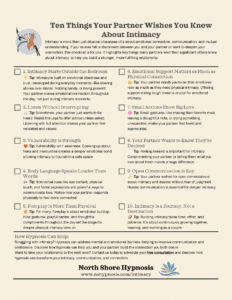
Do you want to have better intimate relationships? Discover ten things your partner wants you to know to have more fulfilling relationships.
Click now for your free checklist, “Ten Things Your Partner Wishes You Knew About Intimacy.
Scott is a Certified Hypnotist with over ten years of experience. He is an Advanced Certified Tantra Educator through the Source School of Tantric Yoga and has extensive experience with Tantric, Taoist, and Somatic intimacy.
Click HERE to schedule a complimentary 20-minute Discover Call with Scott.