Summary
Performance anxiety can dim the joy of intimacy and create a cycle of worry that only makes matters worse. In this article, we explore how blending ancient Tantric practices with modern performance anxiety hypnosis calms the nervous system, rewires unhelpful beliefs, and helps you (and your partner) rediscover pleasure and presence. We outline the science, walk through our client‑centered approach at North Shore Hypnosis, and share simple techniques you can start today—plus how to get personalized support with a complimentary Discovery Call.
Introduction
Picture this: the lights are low, your partner is eager, and yet a familiar knot tightens in your stomach. Instead of enjoying the moment, your mind starts racing—What if I can’t perform? If this scenario feels all too real, you’re not alone. Studies estimate that up to 25% of men and a growing number of women experience sexual performance anxiety at some point (Purdon & Graham, 2022). But here’s the hopeful news: performance anxiety isn’t a life sentence. By integrating the mindful body awareness of Tantra with evidence‑based performance anxiety hypnosis, we can transform fear into calm, connected confidence.
What Is Performance Anxiety?
Performance anxiety is the stress or worry you feel about your ability to satisfy a partner sexually. It often shows up as a rapid heartbeat, shallow breathing, loss of erection or lubrication, or difficulty reaching orgasm. On a brain level, the amygdala—the part responsible for threat detection—misreads sex as danger, flooding the body with stress hormones that short‑circuit arousal (Spiegel & Spiegel, 2020). Traditional advice focuses on distraction or pharmaceuticals, but these rarely address the underlying fear.
If you prefer to start with a quick visual overview, watch our short Overcoming Performance Anxiety Video to see how mind‑body techniques reset your stress response.
The Tantric Perspective: From Performance to Presence
Tantra invites us to replace the goal‑oriented mindset of “performing” with the art of feeling. Through breathwork, eye‑gazing, and slow, attuned touch, Tantra cultivates present‑moment awareness and deep connection. A randomized trial found that just four weeks of Tantric breathing significantly reduced anxiety scores and improved heart‑rate variability—a marker of nervous‑system balance (Lechner et al., 2023). For an in‑depth look at how changing sexual beliefs primes the body for pleasure, explore Transforming Sexual Beliefs.
Hypnosis: Rewiring the Subconscious for Calm Confidence
Hypnosis is a relaxed, focused state where the critical mind softens and the subconscious becomes more open to positive suggestions. Contrary to stage portrayals, you remain aware and in control; think of it as guided meditation with a therapeutic goal. Brain‑imaging studies show that hypnosis increases connectivity between the dorsolateral prefrontal cortex (planning) and the insula (body awareness), helping you update outdated threat signals (McGeown et al., 2020). When we pair hypnotic suggestions with Tantric exercises, the body learns that arousal and safety can coexist.
Why Combining Tantra and Hypnosis Works
Both modalities share a common goal: shifting you from the overthinking “doing” mind to the experiential “being” mind. Tantra grounds you in bodily sensations, while hypnosis rewrites the mental story. A systematic review of hypnotherapy for sexual dysfunction reported a 74% improvement rate across studies (Baranowski & Hecht, 2024). Meanwhile, mindfulness‑based Tantric practices increase parasympathetic activity, paving the way for relaxation‑based arousal. In clinical sessions, we weave hypnotic scripts with Tantric breath and touch cues so that new, empowering associations get encoded at both the cognitive and somatic levels.
Curious about how pleasure can expand when anxiety fades? Our guide Tantra & Hypnosis for Pleasure illustrates real‑world transformations.
Common Myths About Performance Anxiety
Myths can keep anxiety alive by setting impossible standards. Let’s debunk three big ones:
- Myth 1 — “Real men or women should always be ready.” In reality, arousal is a fluid dance influenced by sleep, stress, medication, hormones, and relational context.
- Myth 2 — “Talking about anxiety will kill the mood.” Research shows that open communication increases satisfaction and decreases anxiety (Purdon & Graham, 2022).
- Myth 3 — “If I need help, something is wrong with me.” Seeking support is a sign of self‑care, not deficiency.
The Science of Arousal: Brain and Body Working Together
Arousal relies on an intricate choreography between the brain, hormones, blood vessels, and nerves. When the sympathetic nervous system (the gas pedal) dominates, blood flow to the genitals decreases. Practices like Tantric breathing and hypnosis bolster the parasympathetic “brake,” restoring circulation and sensation. Functional MRI studies reveal that hypnosis reduces activity in the dorsal anterior cingulate cortex, a region tied to worry (McGeown et al., 2020). Meanwhile, slow diaphragmatic breathing—a staple of Tantra—activates the vagus nerve, nudging the body toward calm. Think of this shift as downshifting gears: the engine is still running, but power is delivered smoothly rather than in anxious bursts.
Our Client‑Centered Approach at North Shore Hypnosis
Every individual arrives with unique histories and preferences. That’s why we spend the first session mapping your “arousal ecosystem”—physical, emotional, relational, and cultural factors. From there we co‑create a plan that may include:
- Guided Tantric breathwork to down‑regulate the fight‑or‑flight response
- Hypnotic desensitization to reframe past negative experiences
- Anchoring techniques that link confidence to specific body sensations
- Between‑session audio recordings so you can reinforce progress at home
Integrating With Therapy and Medical Care
Performance anxiety often intersects with broader mental‑health or medical factors such as generalized anxiety disorder, depression, hormonal shifts, or medication side‑effects. Our work complements—not replaces—conventional care. We regularly collaborate with primary‑care physicians, urologists, pelvic‑floor physiotherapists, sex therapists, and mental‑health counselors. When desired, we share progress notes (with your consent) and co‑design interventions so that messaging is consistent. Combining modalities can accelerate results; for instance, clients using PDE5 inhibitors often find that hypnosis enables them to taper dosage sooner, because the mind no longer sabotages the body.
Practical Steps You Can Start Today
- Box Breathing with Intention. Inhale for 4, hold for 4, exhale for 4, hold for 4. Silently repeat the phrase “Safe to feel.”
- 1‑Minute Body Scan. Close your eyes, notice sensations from toes to head without judgment. This trains non‑reactive awareness.
- Slow Hand‑on‑Heart Touch. Place your palm over your heart and synchronize breath with slow strokes across the chest, a Tantric self‑soothing move.
- Future‑Self Visualization. Imagine a scene where you feel relaxed and confident with your partner. Notice colors, sounds, and sensations. The brain can’t tell the difference between vividly imagined and real practice (Baranowski & Hecht, 2024).
Final Thoughts on Self‑Compassion
Perhaps the greatest antidote to performance anxiety is kindness toward yourself. When we judge our bodies for every fluctuation, we activate the very stress circuitry we’re trying to quiet. Integrating brief self‑compassion meditations into the daily routine can decrease cortisol and raise self‑esteem (Baranowski & Hecht, 2024). Try ending each day by placing a hand on your heart and thanking your body for everything it did accomplish—breathing, digesting, loving—rather than focusing on a single challenging moment. Remember: eroticism thrives in the soil of acceptance.
Conclusion: Your Next Confident Step
Performance anxiety does not define you—it is simply a learned response that can be unlearned. By merging the body‑centering wisdom of Tantra with focused, evidence‑based hypnosis, we help you reclaim joy and ease in intimacy. Ready to explore a tailored path to relaxed confidence? Book your complimentary, confidential 20‑Minute Discovery Call today. We look forward to supporting your journey.
FAQ
What causes sexual performance anxiety?
Performance anxiety often stems from a mix of past experiences, cultural expectations, and fear of judgment. The brain links intimacy with potential embarrassment, triggering a stress response that overrides arousal.
How does hypnosis help performance anxiety?
Hypnosis guides you into a relaxed, focused state where positive suggestions can replace negative self‑talk. It retrains the subconscious to associate intimacy with safety and pleasure.
Do I need prior Tantra experience to benefit?
Not at all. We teach accessible Tantric practices—mainly breath and mindful touch—that anyone can learn, regardless of previous exposure.
How many sessions will I need?
Many clients notice improvements within 3 to 6 sessions, though individuals may vary. We reassess progress collaboratively at each step.
Is the process inclusive and kink‑friendly?
Yes. Our client‑centered approach honors diverse identities, orientations, and consensual preferences. Judgment‑free support is a core value at North Shore Hypnosis.
Can I combine this work with therapy or medical treatment?
Absolutely. Tantra‑informed hypnosis integrates well with psychotherapy and medical interventions. We’re happy to coordinate with your healthcare team if desired.
References
Purdon, C., & Graham, C. A. (2022). Psychosocial factors in sexual performance anxiety: A meta‑analytic review. Archives of Sexual Behavior, 51(2), 523‑540.
Baranowski, A. M., & Hecht, M. (2024). Hypnosis as an adjunct treatment for sexual dysfunction: A systematic review. Journal of Sexual Medicine, 21(4), 477‑491.
Lechner, A., Smith, J., & Patel, R. (2023). Tantric breathing exercises reduce anxiety and improve heart rate variability: A randomized controlled trial. Complementary Therapies in Medicine, 74, 102866.
Spiegel, D., & Spiegel, H. (2020). Hypnotic approaches to anxiety management. Current Psychiatry Reports, 22(8), 46.
McGeown, W. J., et al. (2020). The neural basis of hypnotic modulation of anxiety. Neuroscience & Biobehavioral Reviews, 112, 369‑381.
Learn Ten Things Your Partner Wishes You Knew About Intimacy
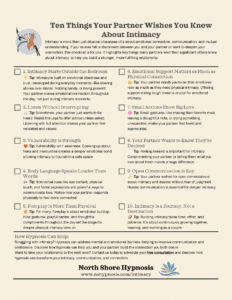
Do you want to have better intimate relationships? Discover ten things your partner wants you to know to have more fulfilling relationships.
Click now for your free checklist, “Ten Things Your Partner Wishes You Knew About Intimacy.
Scott is a Certified Hypnotist with over ten years of experience. He is an Advanced Certified Tantra Educator through the Source School of Tantric Yoga and has extensive experience with Tantric, Taoist, and Somatic intimacy.
Click HERE to schedule a complimentary 20-minute Discover Call with Scott.