

Summary
Living with a disability presents unique challenges in maintaining intimate connections, but it doesn’t diminish your capacity for pleasure, love, and meaningful relationships. Through specialized disability intimacy hypnosis techniques, we help individuals and couples navigate physical changes, overcome psychological barriers, and rediscover confidence in their intimate lives. This evidence-based approach combines clinical hypnotherapy with inclusive, person-centered care to address body image concerns, performance anxiety, communication challenges, and physical adaptations. Our methods empower you to reframe limiting beliefs, enhance mind-body connection, and develop personalized strategies that honor your unique needs and desires while fostering deeper intimacy with yourself and your partner.
Introduction
At North Shore Hypnosis, we believe that every person deserves fulfilling intimate relationships, regardless of physical ability. Disability doesn’t diminish your worth, your capacity for pleasure, or your right to meaningful connection. Through specialized hypnotic techniques designed specifically for individuals navigating intimacy after disability, research shows that up to 85% of people with disabilities report concerns about intimacy and sexual function (McCabe et al., 2016). Yet society rarely discusses how disability intimacy hypnosis can be a powerful tool for reclaiming confidence and connection.
Understanding the Unique Challenges of Disability and Intimacy
When disability enters our lives—whether through injury, illness, or progressive conditions—it often brings unexpected changes to how we experience our bodies and relationships. The challenges extend far beyond physical limitations, encompassing emotional, psychological, and social dimensions that can profoundly impact intimate connections.
Many individuals experience what researchers call “sexual self-schema disruption”—a fundamental shift in how they perceive themselves as sexual beings (Taleporos & McCabe, 2005). This disruption can manifest as body image concerns, fear of rejection, performance anxiety, or a complete withdrawal from intimate situations. The mind begins creating stories about what’s possible or impossible, often limiting us more than our actual physical circumstances.
Communication barriers frequently emerge as partners struggle to discuss changing needs, preferences, and concerns. Without open dialogue, assumptions and misunderstandings can create distance where connection once flourished. Additionally, medical professionals often overlook sexual health in disability care, leaving individuals without adequate resources or support.
We also encounter internalized ableism—societal messages that suggest disabled bodies are less desirable, capable, or worthy of pleasure. These deeply embedded beliefs can become self-fulfilling prophecies, creating psychological barriers that may be more limiting than physical ones.
How Disability Intimacy Hypnosis Creates Transformation
Hypnosis offers a unique and powerful approach to addressing intimacy challenges after disability because it works directly with the subconscious mind—where our deepest beliefs, fears, and patterns reside. Unlike traditional talk therapy alone, hypnotic techniques can help rewire limiting thought patterns and create new neural pathways that support confidence, pleasure, and connection.
Clinical hypnosis, also called hypnotherapy, is a focused state of attention and heightened suggestibility that allows individuals to access and modify subconscious patterns. Research demonstrates significant effectiveness in addressing sexual dysfunction, body image issues, and anxiety—all common concerns for individuals adapting to intimacy after disability (Brom et al., 2017).
Our disability intimacy hypnosis approach begins with understanding your unique situation, concerns, and goals. We don’t use a one-size-fits-all method because every person’s experience with disability and intimacy is different. Instead, we create personalized sessions that might include visualization techniques to enhance body awareness, suggestion therapy to build confidence, and regression work to address limiting beliefs formed after diagnosis or injury.
Through hypnotic visualization, clients learn to reimagine their relationship with their body, focusing on capability rather than limitation. We help you discover new sources of pleasure and connection while honoring the reality of your physical situation. This isn’t about pretending limitations don’t exist—it’s about expanding your awareness of what remains possible.
Specific Hypnotic Techniques for Intimate Empowerment
Our client-centered approach incorporates several specialized techniques tailored to the unique needs of individuals navigating intimacy after disability. Somatic hypnosis helps reconnect you with your body’s sensations and capabilities, moving beyond areas of limitation to discover new sources of pleasure and awareness. This technique is particularly powerful for individuals who have experienced trauma or disconnection from their physical selves.
Confidence-building visualization sessions help reprogram negative self-talk and limiting beliefs about desirability and capability. Through guided imagery, clients practice successful intimate encounters, building neural pathways that support real-world confidence. We might visualize scenarios where you communicate effectively with partners, experience pleasure, or navigate physical adaptations with grace and self-assurance.
Anxiety reduction techniques address performance concerns and social fears that often accompany intimacy challenges. Progressive muscle relaxation combined with hypnotic suggestion helps create a calm, receptive state that supports both physical and emotional intimacy. These skills become tools you can use independently to manage anxiety in real-life situations.
Pain management protocols, when appropriate, help individuals with chronic pain conditions maintain intimate connections despite physical discomfort. Hypnotic pain relief techniques can provide temporary respite during intimate moments while teaching the mind to reframe pain sensations.
Communication enhancement work helps both individuals and couples develop the skills needed for open, honest discussions about changing needs and preferences. Through role-playing in hypnotic states, clients practice difficult conversations and develop confidence in expressing their authentic desires and boundaries.
Research Supporting Hypnotic Interventions for Intimacy
The effectiveness of hypnosis for sexual and intimacy concerns is well-documented in peer-reviewed research. A comprehensive meta-analysis found that hypnotic interventions significantly improved sexual function, with effect sizes comparable to other established therapeutic approaches (Brotto et al., 2016). For individuals with disabilities specifically, studies show particular promise in addressing psychological barriers to intimacy.
Research by Komisaruk and Whipple (2011) demonstrated that hypnotic techniques could help individuals with spinal cord injuries experience pleasure and arousal through alternative pathways, suggesting that the brain’s plasticity allows for adaptation even after significant physical changes. Their work supports our clinical observation that the mind often holds more limitations than the body itself.
A randomized controlled trial examining hypnosis for sexual dysfunction found significant improvements in sexual satisfaction, arousal, and overall quality of life among participants (Meston et al., 2020). Importantly, these improvements maintained over time, suggesting that hypnotic interventions create lasting change rather than temporary relief.
Studies focusing on body image and self-esteem—crucial components of intimate confidence—show that hypnotic visualization and suggestion techniques can significantly improve self-perception and reduce appearance-related anxiety (Cash & Hrabosky, 2004). For individuals adjusting to physical changes after disability, these findings offer hope for renewed self-acceptance and confidence.
Practical Strategies for Adapting Intimacy
Beyond formal hypnotic sessions, we teach practical strategies that clients can implement in their daily lives and relationships. Mindfulness techniques derived from hypnotic practice help maintain present-moment awareness during intimate encounters, reducing anxiety about performance or physical limitations while enhancing sensory experience.
We work with clients to develop personalized “intimacy maps”—explorations of what feels good, what doesn’t, and what adaptations might enhance pleasure and connection. This process often reveals new possibilities that individuals hadn’t considered, expanding their understanding of what intimacy can look like.
Environmental modifications and positioning strategies are discussed openly and without judgment. We help clients approach these practical considerations with creativity and confidence rather than shame or embarrassment. Often, simple changes in environment, timing, or approach can dramatically improve intimate experiences.
Energy management techniques help individuals with chronic illnesses or fatigue-related conditions optimize their energy for intimate connections. Through hypnotic suggestion and practical planning, clients learn to work with their body’s natural rhythms rather than against them.
Partner involvement, when appropriate and desired, helps couples navigate changes together. We provide communication frameworks and exercises that promote understanding, patience, and creative problem-solving within relationships.
Our Inclusive, Client-Centered Approach
At North Shore Hypnosis, we recognize that intimacy and sexuality exist on a spectrum, and our approach honors the full diversity of human experience. We work with individuals across all gender identities, sexual orientations, and relationship configurations. Our practice is explicitly kink-friendly, understanding that alternative expressions of sexuality may be particularly relevant for individuals adapting to physical limitations.
We believe that you are the expert on your own experience. Our role is to provide tools, techniques, and support while honoring your autonomy in defining what intimacy and fulfillment look like for you. This person-centered approach ensures that therapeutic goals align with your authentic desires rather than societal expectations or assumptions.
Confidentiality and safety are paramount in our practice. We understand that discussing intimacy and disability can feel vulnerable, and we create a judgment-free space where you can explore concerns, fears, and desires openly. Our office policies and therapeutic approaches prioritize your comfort and emotional safety throughout the process.
Cultural sensitivity is woven throughout our practice, recognizing that attitudes toward disability, sexuality, and intimacy vary across cultural backgrounds. We work to understand and honor your cultural context while challenging any limiting beliefs that may interfere with your wellbeing and happiness.
Beginning Your Journey Toward Intimate Empowerment
Starting therapy focused on intimacy and disability can feel daunting, but taking that first step demonstrates tremendous courage and self-advocacy. During initial sessions, we focus on building rapport, understanding your unique situation, and identifying specific goals and concerns. No topic is off-limits, and we encourage open, honest communication about your experiences and desires.
Assessment includes exploring your relationship history, current challenges, physical considerations, and emotional concerns. We also discuss your support system, current coping strategies, and previous therapeutic experiences. This comprehensive understanding allows us to tailor our approach to your specific needs and circumstances.
Goal-setting is collaborative, ensuring that therapeutic objectives align with your authentic desires and values. Some clients focus on rebuilding confidence, others on improving communication with partners, and still others on exploring new forms of pleasure and connection. Your goals may evolve throughout the therapeutic process, and we remain flexible and responsive to your changing needs.
Session frequency and duration depend on individual circumstances and preferences. Some clients benefit from intensive work over several weeks, while others prefer a slower pace that allows for integration between sessions. We work with you to develop a therapeutic schedule that fits your lifestyle and maximizes effectiveness.
Conclusion: Your Intimate Life Awaits
Living with a disability does not diminish your right to pleasure, connection, and fulfilling intimate relationships. Through specialized disability intimacy hypnosis techniques, we help individuals and couples navigate the challenges of physical change while discovering new possibilities for connection and satisfaction.
Your journey toward intimate empowerment is unique, and you deserve support that honors your individual needs, desires, and circumstances. At North Shore Hypnosis, we provide evidence-based, inclusive care that recognizes your expertise in your own experience while offering tools and techniques for transformation.
The path forward begins with a single step—reaching out for support. We invite you to schedule a complimentary, confidential 20-Minute Discovery Call where we can discuss your concerns, answer questions about our approach, and determine if our services align with your needs. This no-pressure conversation allows you to learn more about how disability intimacy hypnosis might support your goals while ensuring that you feel comfortable with our practice and approach.
Your intimate life is waiting for you to reclaim it. Let’s work together to make that vision a reality.
References
Brom, M., Laan, E., Everaerd, W., Spinhoven, P., & Both, S. (2017). The role of conditioning, learning, and dopamine in sexual behavior: A narrative review of animal and human studies. Neuroscience & Biobehavioral Reviews, 77, 1-26.
Brotto, L. A., Krychman, M., & Jacobson, P. (2008). Eastern approaches for enhancing women’s sexuality: Mindfulness, acupuncture, and yoga. Journal of Sexual Medicine, 5(12):2741-8.
Cash, T. F., & Hrabosky, J. I. (2004). Treatment of body image disturbances. In J. K. Thompson (Ed.), Handbook of eating disorders and obesity (pp. 515-541). John Wiley & Sons.
Komisaruk, B. R., & Whipple, B. (2011). Non-genital orgasms. Sexual and Relationship Therapy, 26(4), 356-372.
McCabe, M. P., Taleporos, G., & Doherty, M. (2016). Sexual esteem, sexual satisfaction, and sexual behavior among people with physical disability. Archives of Sexual Behavior, 45(7), 1621-1636.
Meston, C. M., Freihart, B. K., Handy, A. B., Kilimnik, C. D., & Rosen, R. C. (2020). Scoring and interpretation of the FSFI: What can be learned from 20 years of use? Journal of Sexual Medicine, 17(1), 17-25.
Taleporos, G., & McCabe, M. P. (2005). The relationship between the severity and duration of physical disability and body esteem. Psychology and Health, 20(5), 637-650.
Frequently Asked Questions About Disability Intimacy Hypnosis
What is disability intimacy hypnosis and how does it work?
Disability intimacy hypnosis is a specialized therapeutic approach that uses clinical hypnotherapy techniques to help individuals navigate intimacy challenges related to physical disabilities. It works by accessing the subconscious mind to address limiting beliefs, reduce anxiety, and create new neural pathways that support confidence, pleasure, and connection. The process involves guided relaxation, visualization, and positive suggestions tailored to your specific needs and goals.
Is hypnosis safe for people with disabilities?
Yes, clinical hypnosis is generally safe for people with disabilities when conducted by trained professionals. We conduct thorough assessments to ensure hypnosis is appropriate for your specific situation. Hypnosis is a natural state of focused attention that you remain in control of throughout the session. We work collaboratively with your healthcare team when appropriate and modify techniques to accommodate any specific needs or limitations.
Do I need to involve my partner in the sessions?
Partner involvement is entirely your choice. Many clients benefit from individual work first to build confidence and clarity about their needs before involving partners. When couples sessions are appropriate, we provide a safe space for open communication and mutual understanding. We respect all relationship configurations and work with whatever feels right for your situation.
How many sessions will I need?
The number of sessions varies based on individual goals, complexity of concerns, and personal progress. Some clients see improvements within 3-4 sessions, while others benefit from longer-term work. During your Discovery Call, we’ll discuss realistic expectations and and options tailored to your needs and circumstances.
What types of disabilities do you work with?
We work with individuals across all types of disabilities, including spinal cord injuries, amputations, chronic illnesses, neurological conditions, mobility impairments, chronic pain, and progressive conditions. Our approach is highly individualized, focusing on your unique situation rather than your specific diagnosis. Every person’s experience with disability and intimacy is different, and we honor that diversity.
Can hypnosis help with physical limitations or just psychological ones?
While hypnosis cannot change physical limitations, it can significantly impact how you experience and work with them. Hypnosis can help with pain management, increase body awareness, reduce muscle tension, and help you discover new sources of pleasure and sensation. Most importantly, it addresses the psychological barriers that often limit us more than physical ones do.
Is your practice LGBTQ+ friendly and kink-aware?
Absolutely. North Shore Hypnosis is explicitly LGBTQ+ affirming and kink-friendly. We work with individuals across all gender identities, sexual orientations, and relationship configurations. We understand that alternative expressions of sexuality may be particularly relevant for individuals adapting to physical limitations, and we approach all forms of consensual adult sexuality without judgment.
What should I expect during my first session?
Your first session focuses on building rapport and understanding your unique situation. We’ll discuss your history, current challenges, goals, and any concerns about the process. This session is primarily conversational—we want you to feel comfortable before beginning any hypnotic work. We’ll also explain how hypnosis works and answer any questions you have about the process.
Learn Ten Things Your Partner Wishes You Knew About Intimacy
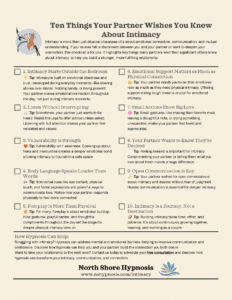
Do you want to have better intimate relationships? Discover ten things your partner wants you to know to have more fulfilling relationships.
Click now for your free checklist, “Ten Things Your Partner Wishes You Knew About Intimacy.
Scott is a Certified Hypnotist with over ten years of experience. He is an Advanced Certified Tantra Educator through the Source School of Tantric Yoga and has extensive experience with Tantric, Taoist, and Somatic intimacy.
Click HERE to schedule a complimentary 20-minute Discover Call with Scott.