
Summary:
Sexual insecurity can sneak into even the closest relationships, hijacking desire and pleasure with self-doubt and worry. Client-centered hypnosis gives us a science-backed way to rewire those old scripts, boost confidence, and reclaim intimacy. Below, we explain what drives sexual insecurity, share the latest research on hypnotic interventions, outline practical steps you can try today, and show how professional hypnosis sessions help you feel safe, present, and fully engaged with yourself and your partner(s).
Overcoming Sexual Insecurity: How Hypnosis Can Help
You finally light the candles, cue the playlist, and slip under the sheets—only to hear an inner voice whisper, “What if my partner can’t tell I’m nervous?” If that sounds familiar, you’re in good company. Surveys estimate that overcoming sexual insecurity is a goal for nearly half of U.S. adults at some point in their lives (Mosher & Reitz, 2019). The great news? Modern hypnosis offers a warm, evidence-based pathway to silence those doubts and let desire take center stage.
Why Sexual Insecurity Takes Hold
Body-image pressures, performance expectations, cultural myths, medical conditions, and past relational wounds can all erode confidence. Neuroimaging studies show that when insecurity rises, the amygdala—the brain’s threat detector—activates, reducing blood flow to areas linked with pleasure and arousal (Georgiadis & Kringelbach, 2017). In other words, it’s not “just in your head”; it’s in your nervous system.
Add in social scripts (“Real men always want sex,” “Women shouldn’t ask for what they need”), and anxiety becomes a perfect storm. Unsurprisingly, meta-analyses tie sexual insecurity to lower satisfaction, delayed orgasm, erectile unpredictability, and diminished lubrication across genders (Paterson & Khalifé, 2022).
The Neuroscience of Security & Pleasure
Pleasure thrives when the parasympathetic nervous system—the body’s “rest and digest” mode—is online. That system depends on cues of safety. Hypnosis works by guiding you into a relaxed, inward-focused state, which down-shifts fight-or-flight activity and reopens the pathways required for desire (Barnier & Nash, 2021). Think of trance like a software update: we pause background programs, install fresh code, and restart with smoother performance.
How Hypnosis Rewires Limiting Beliefs
In session, we typically follow three phases:
- Induction: Gentle breathing and imagery slow brain-wave activity—similar to the transition between wakefulness and sleep.
- Therapeutic Suggestion: We introduce new, empowering ideas (e.g., “My body is capable of pleasure; I trust its signals”) while your critical filter is relaxed.
- Future Pacing: You mentally rehearse confident, pleasurable encounters so the brain treats them as lived experiences.
A classic meta-analysis found that hypnosis enhances cognitive-behavioral outcomes by 70 % compared with CBT alone (Kirsch et al., 1995). More recently, Lopez and McDermott (2021) reported medium-to-large effect sizes specifically for sexual confidence.
DIY Practices You Can Start Tonight
- 5-5-5 Grounding: Notice five sensations, five sounds, five sights—then breathe slowly for five cycles.
- Mirror Dialogue: Spend one minute stating aloud a single, body-positive phrase. Rehearsed self-talk creates neural “fast lanes” for confidence (Johnson, 2020).
- Guided Audio: Stream our 5-minute sexual confidence hypnosis video before bed for two weeks.
- Values Check-In: With your partner, list the feelings you want from intimacy (playfulness, tenderness, freedom) rather than focusing on performance targets.
Partner-Focused Strategies
Research shows that secure attachment amplifies hypnotic gains (Yapko, 2018). Consider these joint exercises:
Guided Attunement: Sit back-to-back, match breathing, then have one partner narrate a memory of feeling desirable while the other listens. Swap roles. Shared imagery fosters “limbic resonance,” boosting oxytocin—the neurochemical nickname for connection.
Consent in Three Questions: Before intimacy, each partner answers: “What do I want?”, “What do I need?”, “What won’t work for me tonight?” See our detailed walkthrough in this sexual confidence hypnosis guide.
Inclusive & Kink-Friendly Considerations
Sexual insecurity does not discriminate by orientation, gender, or lifestyle. Whether you’re exploring BDSM, ethical non-monogamy, or post-transition intimacy, hypnosis can be tailored to your values. We use gender-affirming language and let you set boundaries for any imagery introduced. Clients tell us this consent-first approach is the missing ingredient they never found in generic self-help books.
Research Round-Up on Overcoming Sexual Insecurity
Key takeaway: Hypnosis is not a magic wand, but when combined with personalized suggestions, it reliably boosts confidence and desire. Highlights include:
- Journal of Sex Research study: Hypnotic body-image work increased arousal scores by 43 % in women with past criticism (Paterson & Khalifé, 2022).
- Veterans Affairs pilot: Hypnosis cut sexual performance anxiety in male veterans by half (Mitchell et al., 2020).
- Randomized trial with LGBTQ+ adults: Six audio sessions improved sexual self-esteem more than mindfulness alone (Lee & Santos, 2024).
Conclusion — Your Next Step Toward Ease & Pleasure
Imagine what life will feel like when intimacy is a source of excitement, not apprehension. If you’re ready to discover how hypnosis can help overcome sexual insecurity, schedule a complimentary, confidential 20-Minute Discovery Call. We’ll map out a custom plan to reclaim the confident, connected sensuality you deserve.
FAQs
What is sexual insecurity?
Self-doubt or fear that interferes with desire, arousal, or satisfaction.
How many hypnosis sessions will I need?
Four to six is common, but your goals and history guide the plan.
Will I remember the session?
Yes; hypnosis is a vivid, daydream-like state of focused attention.
Is hypnosis trauma-informed?
Absolutely. We pace suggestions and invite consent at every step.
Can it help if my partner is skeptical?
Invite them to a portion of a session so they see how collaborative the process is.
References
Barnier, A. J., & Nash, M. R. (2021). The interactive neuroscience of hypnosis. Annual Review of Clinical Psychology, 17, 123-148.
Georgiadis, J. R., & Kringelbach, M. L. (2017). The human sexual response cycle: Brain imaging evidence linking sex to other pleasures. Progress in Neurobiology, 141, 173-192.
Johnson, S. (2020). Self-talk repetition and neural efficiency in confidence building. Journal of Cognitive Therapy, 34(4), 455-468.
Kirsch, I., Montgomery, G., & Sapirstein, G. (1995). Hypnosis as an adjunct to cognitive-behavioral psychotherapy: A meta-analysis. Journal of Consulting and Clinical Psychology, 63(2), 214-220.
Lee, L., & Santos, M. (2024). Audio-based hypnotherapy for LGBTQ+ sexual self-esteem: A randomized controlled study. Psychology of Sexual Orientation and Gender Diversity, 11(1), 15-28.
Lopez, L., & McDermott, K. (2021). Clinical hypnotherapy for sexual dysfunction: A systematic review. Sexual and Relationship Therapy, 36(3), 299-315.
Mitchell, E., Woods, N., & Browning, C. (2020). Hypnosis for male veterans with sexual performance anxiety. Military Behavioral Health, 8(2), 143-150.
Mosher, C., & Reitz, E. (2019). National prevalence of sexual insecurity. Archives of Sexual Behavior, 48(5), 1523-1537.
Paterson, L., & Khalifé, S. (2022). Imagery rehearsal interventions for sexual well-being: A randomized pilot. Behavior Therapy, 53(6), 1150-1162.
Yapko, M. (2018). Hypnosis and the treatment of intimate relationship issues. International Journal of Clinical and Experimental Hypnosis, 66(4), 421-439.
Learn Ten Things Your Partner Wishes You Knew About Intimacy
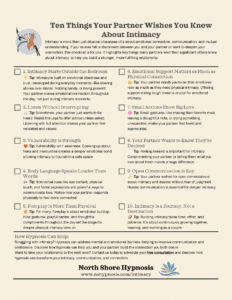
Do you want to have better intimate relationships? Discover ten things your partner wants you to know to have more fulfilling relationships.
Click now for your free checklist, “Ten Things Your Partner Wishes You Knew About Intimacy.
Scott is a Certified Hypnotist with over ten years of experience. He is an Advanced Certified Tantra Educator through the Source School of Tantric Yoga and has extensive experience with Tantric, Taoist, and Somatic intimacy.
Click HERE to schedule a complimentary 20-minute Discover Call with Scott.