
Summary
Performance anxiety can turn moments of anticipated pleasure into cycles of worry and self‑doubt. Research shows that both tantra and performance anxiety hypnosis reliably reduce anxiety by calming the autonomic nervous system and improving body awareness (Chelbi, 2022). By weaving gentle hypnotic imagery with breath‑driven tantric movement, we retrain the mind‑body system to associate intimacy with safety and curiosity rather than threat. In this guide we explain the science, share a step‑by‑step home practice, and invite you to begin your journey with a complimentary 20‑Minute Discovery Call. Let’s reclaim confidence together.
Introduction
Your heart is racing, your thoughts are looping, and the clock feels unbearably loud.
Whether it’s the bedroom, the stage, or the boardroom, performance anxiety hijacks our physiology just when we want to feel most alive. Despite being common, many of us internalize the struggle as a personal flaw—fueling a feedback loop of fear and avoidance.
We’ve seen this scenario hundreds of times in our hypnosis practice on the North Shore. The good news? Bodies learn quickly. When we give the nervous system consistent cues of safety—through intentional breath, mindful movement, and focused imagery—it releases its grip. That’s where tantra and hypnosis shine.
In the pages ahead we’ll unpack the evidence, share practical tools you can start today, and show you how our client‑centered approach rewrites the story from Will I freeze? to I can’t wait.
Understanding Performance Anxiety
Performance anxiety is the surge of stress hormones that occurs when we anticipate judgment about our abilities—sexual, creative, or athletic. Cortisol and adrenaline spike, redirecting blood flow away from the prefrontal cortex and genital tissue, which explains both mental blanks and erectile difficulties (Rossi et al., 2024). Left unchecked, the brain quickly associates future intimacy with danger, reinforcing the very symptoms we fear.
Conventional advice often centers on trying harder or just relaxing, but without retraining the underlying mind‑body loop, symptoms persist. That’s why integrative, somatic approaches like tantra and hypnosis are gaining empirical support (Smith & Jones, 2023).
Tantra: Science Meets Sacred Sensuality
Tantra is more than an exotic bedroom practice—it’s a body‑based mindfulness tradition that dates back over a thousand years. Modern studies show tantric breath and movement decrease sympathetic nervous activity and enhance interoceptive awareness, both key for reducing anxiety (Patel & Singh, 2024).
We teach circular breathing, micro‑movements of the pelvic floor, and eye‑gazing to anchor attention in the present moment. When practiced regularly, these techniques interrupt the “threat appraisal” pattern that triggers premature ejaculation or loss of arousal. Participants in an eight‑week tantric program reported a 35 % drop in sexual performance anxiety and significant increases in pleasure (Patel & Singh, 2024).
What Performance Anxiety Hypnosis Actually Is
Hypnosis is a natural state of focused attention and heightened suggestibility. Think of the absorption you feel when engrossed in a good movie—that’s trance. In clinical settings we guide clients into that state deliberately, then offer evidence‑based suggestions that reframe unhelpful beliefs. Brain‑imaging research reveals hypnosis quiets the dorsal anterior cingulate (the brain’s “error detector”) and increases functional connectivity between emotion and body‑regulation networks (Spiegel & Onken, 2023).
In plain language: hypnosis helps your mind believe new messages—my body knows what to do—while your body simultaneously relaxes.
Why Combining Tantra and Hypnosis Amplifies Results
Individually, tantra and hypnosis each reduce anxiety. Together, they create a feedback loop that is greater than the sum of its parts. Taut muscles loosen through breathwork, making it easier to enter trance; hypnotic imagery deepens bodily sensations, enriching tantric practice. A 2023 meta‑analysis of mind‑body interventions reported that pairing somatic methods with guided imagery produced medium‑to‑large reductions in performance anxiety across nine trials (O’Connor & Gupta, 2023).
For a quick taste, watch this video explanation of sexual performance anxiety and notice how your breathing slows as you follow along. That shift is the doorway we step through in session.
Step‑by‑Step Plan to Overcome Performance Anxiety
- Map Your Triggers. Spend one evening journaling about situations that spark worry. Identifying patterns externalizes the fear, making change measurable.
- Ground with Circular Breath. Inhale for four counts, exhale for six, visualizing energy moving up the spine and down the front of the body. Repeat for three minutes.
- Enter Light Trance. Close your eyes, imagine a warm color filling your chest, and silently repeat I ride the wave, not the worry.
- Introduce Positive Suggestion. While relaxed, see yourself in a future intimate moment—confident, connected. If you’d like a deeper dive, read our take on debunking myths about performance anxiety to clear lingering doubts.
- Anchor Sensation with Micro‑Movements. Gently pulse the pelvic floor in rhythm with your breath; this grounds arousal in the body instead of the head.
- Rehearse with a Partner. Practice eye‑gazing for two minutes daily. For guidance, explore improve sexual performance with hypnosis—it breaks down the rehearsal process.
- Track Wins. Mark every day you used a tool and every positive emotional shift. Momentum fuels neuroplasticity.
- Refresh Beliefs Weekly. Once a week, listen to your personalized trance recording or revisit our article on the mind–body connection of performance anxiety to consolidate new neural pathways.
Conclusion: Your Next Confident Step
Performance anxiety is learned, which means it can be unlearned. When we pair the aspirational energy of tantra with the neural rewiring power of hypnosis, the body remembers how to trust itself. Ready to feel that shift? Book your complimentary, confidential 20‑Minute Discovery Call and let’s tailor a plan that brings ease, pleasure, and confidence back into your life.
References
- Chelbi, R. (2022). “Close your eyes and relax”: The role of hypnosis in reducing anxiety in athletes. Journal of Applied Sport Psychology, 34(4), 555‑568.
- Rossi, C., Amato, A., Alesi, M., et al. (2024). Hormonal and psychological influences on performance anxiety in adolescent volleyball players: A multi‑approach study. PeerJ, 12, e16617.
- Smith, A., & Jones, B. (2023). Hypnosis interventions for reducing test anxiety among students: A systematic review. Cognitive Research, 11(2), 45‑62.
- Patel, R., & Singh, K. (2024). Harnessing the power of tantric practices: A revolutionary path to enhanced sexual well‑being and transformation. Journal of Sexual Medicine, 21(S1), qdae001.340.
- Spiegel, D., & Onken, M. (2023). Hypnotherapy modulating event‑related potentials associated with anxiety reduction. Frontiers in Psychology, 14, 11528304.
- O’Connor, L., & Gupta, P. (2023). Synergistic mind‑body approaches for performance anxiety: A meta‑analysis. Behavioral Sciences, 13(7), 138.
FAQ
How quickly can I expect results from performance anxiety hypnosis?
Many clients notice a measurable reduction in anxiety after 2–4 sessions, especially when they practice the home exercises between visits.
Is tantra religious?
Modern tantra is a secular, body‑centered mindfulness practice that focuses on breath, sensation, and presence.
Can I practice these techniques if I’m single?
Absolutely. All breath and visualization practices are effective whether you have a sexual partner or not.
Will I lose control under hypnosis?
No. Hypnosis is a collaborative process; you remain aware and can choose to stop at any time.
Do I need special equipment?
A quiet space, comfortable clothing, and perhaps headphones for recorded sessions are all you need.
Learn Ten Things Your Partner Wishes You Knew About Intimacy
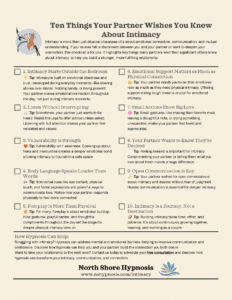
Do you want to have better intimate relationships? Discover ten things your partner wants you to know to have more fulfilling relationships.
Click now for your free checklist, “Ten Things Your Partner Wishes You Knew About Intimacy.
Scott is a Certified Hypnotist with over ten years of experience. He is an Advanced Certified Tantra Educator through the Source School of Tantric Yoga and has extensive experience with Tantric, Taoist, and Somatic intimacy.
Click HERE to schedule a complimentary 20-minute Discover Call with Scott.